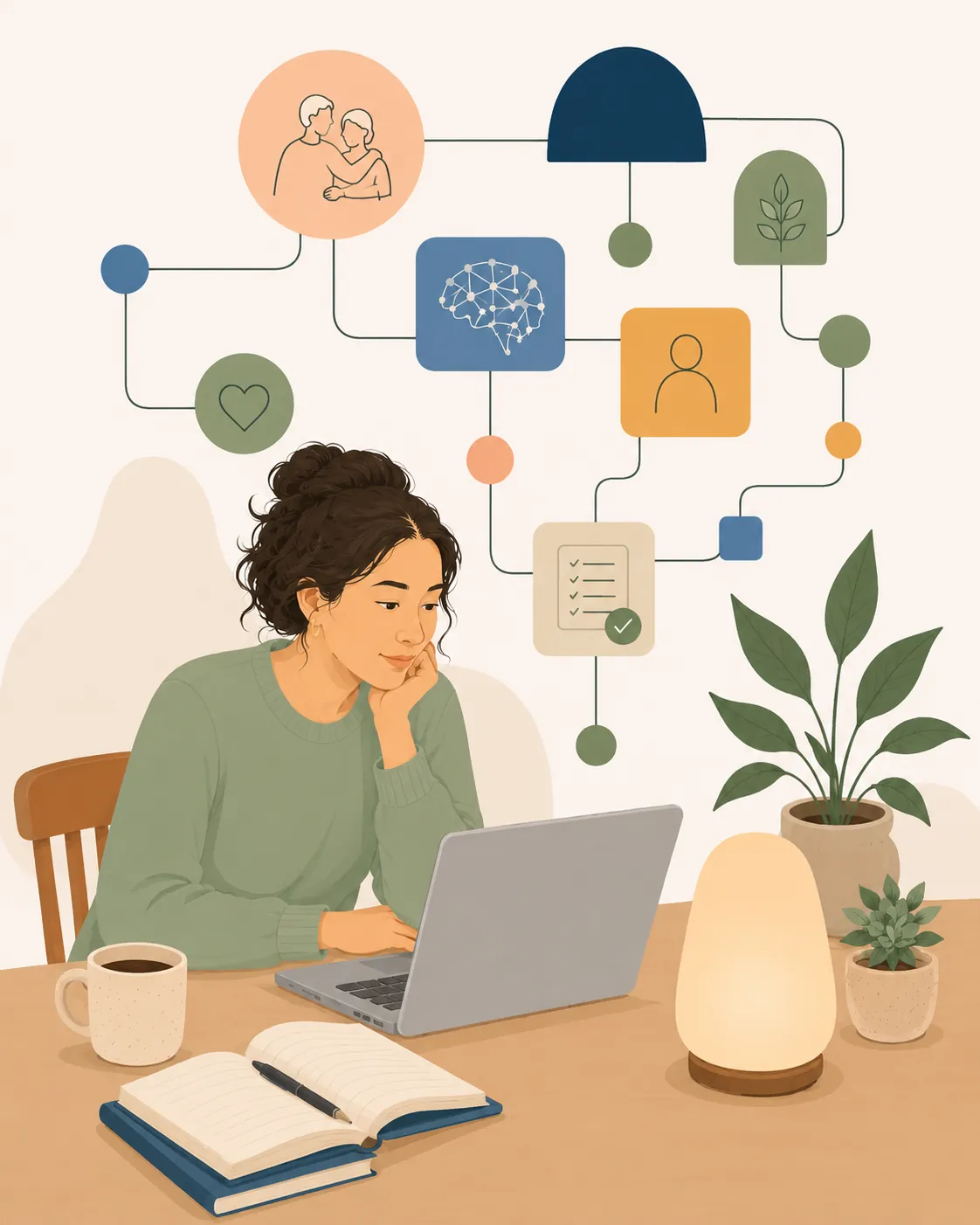
We don’t usually file software under “care.” We call it a product, a platform, a tool, words that keep a comfortable distance from the person at the other end. But think about when software matters most. Someone is filing for benefits they need this month. Or alone with a test result, or moving money to pay for life, or just trying to reach a person they love. Build the thing that meets people where they are and the job stops looking like engineering. It starts looking like care.
We’ve felt that most plainly building tools that sit beside actual caregiving, the software a nurse or a counselor or a case manager reaches for on a regular day. But the lesson generalizes. Almost everything we ship lands on someone at a moment we don’t get to watch. The only real question is whether we built like we knew that.
What care actually is
It helps to borrow from people who studied care directly. The philosopher Joan Tronto broke it into four plain parts: attentiveness, responsibility, competence, and responsiveness.1 There’s nothing about features, or scale, or speed on the list. Care starts with attention, with noticing what someone actually needs, which sometimes is not the thing they directly asked for. Then owning it, doing it well, and consistently reviewing how it is actually working.
Run software through that filter and the priorities rearrange themselves. Attentiveness means designing for the person having the worst day on your platform, not the average one. It’s the error message that explains itself, the form that remembers what you typed, the screen that still works on an old phone over bad signal. It means counting the roughly one in six people on earth who live with a significant disability as people you’re caring for, not edge cases you’ll get to later.2 Care is mostly attention, paid in advance, to someone you might never meet.
A good caregiver helps you leave
Here’s where the metaphor cuts. The point of care is to leave the person more capable, less dependent, freer. A good nurse is working toward your discharge. A lot of software runs on the opposite incentive, to be needed more, opened more, harder to set down. There’s a name for the craft of pushing people into things they never meant to do, dark patterns, coined back in 2010 for exactly the tricks that treat a human as a number to move.3
Caregiving points the other way. Almost thirty years ago, two researchers at Xerox described “calm technology,” tools that sit in the periphery and ask for your attention only once they’ve earned it.4 That’s a caregiver’s instinct turned into design, be present, be reliable, and otherwise stay out of the way. The kindest thing a tool can do is hand you back your afternoon.
A good nurse is working toward your discharge. What is your software working toward?
The care is in the maintenance
The unglamorous truth is that caregiving is mostly repetition. Not grand gestures, but showing up again, the same small attentions, day after day. Software is no different should be no different. The whole culture rewards the launch and rejects at the years of tending that decide whether the thing ever helped anyone. Two historians made the case well, for most lives, it’s maintenance not innovation, that matters.5
So this is the test we keep coming back to. Not “did engagement go up,” but “did a real person get met, helped, and treated with a little dignity, then left freer than before.” Call it caregiving, or craft, or just paying attention. When software is built that way you can feel it from the other side, the same way you can feel when it wasn’t. We’d rather build the kind you can put down at the end of the day, because it did its job and trusted you to go live the rest of your life.
References
- Tronto, J. C. (1993). Moral Boundaries: A Political Argument for an Ethic of Care. Routledge. ethicsofcare.org
- World Health Organization (2023). "Disability" (fact sheet). who.int
- Brignull, H. (2010). "Dark Patterns" / Deceptive Design. deceptive.design
- Weiser, M., & Brown, J. S. (1996). "The Coming Age of Calm Technology." calmtech.com
- Russell, A. L., & Vinsel, L. (2016). "Hail the Maintainers" (Innovation Is Overvalued. Maintenance Often Matters More). Aeon. aeon.co